American Academy For Yoga in Medicine

October 2023

Blogs

Combating Teaching Burnout with Yoga and Meditation: A Holistic Approach to Self-Care for Educators

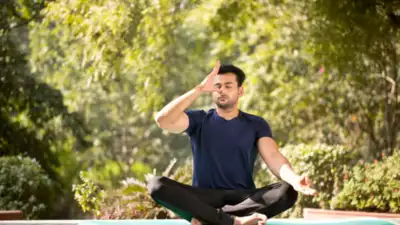
Introduction Teaching is a noble profession, but it’s also one that comes with its fair share of stress and emotional toll. Burnout among teachers is a growing concern, and the statistics are alarming. According to recent studies, 44% of teachers in the United States report feeling burned out often or always, a rate significantly higher than the 30% burnout rate for other occupations. The situation is equally dire in India, where 44% of teachers also report feeling burned out, according to a study by the National Council for Teacher Education (NCTE) in 2019. But there’s hope. Yoga and meditation have been scientifically proven to reduce stress and improve mental well-being. This article aims to provide a comprehensive guide on how these ancient practices can help you combat teaching burnout. The Reality of Teaching Burnout What is Teaching Burnout? Burnout is a state of emotional, physical, and mental exhaustion caused by excessive and prolonged stress. It occurs when you feel overwhelmed, emotionally drained, and unable to meet constant demands. In the context of teaching, this can manifest in various ways: The statistics paint a grim picture. In the United States alone, 44% of teachers report feeling burned out often or always. This is significantly higher than the 30% burnout rate for other occupations. Similarly, a study by the National Council for Teacher Education (NCTE) in 2019 found that 44% of teachers in India also reported feeling burned out. These numbers are not just numbers; they represent educators who are struggling to maintain their passion for teaching while grappling with overwhelming stress. The Impact on Teachers and Students Burnout doesn’t just affect teachers; it also impacts the quality of education that students receive. A stressed teacher is less likely to be effective in the classroom, which can have a ripple effect on students’ learning experiences. Here’s how: Common Causes and Urgent Statistics The common causes of teaching burnout include workload, emotional stress, and lack of support. The situation is urgent: Yoga: The Physical Aspect of Self-Care Benefits of Yoga for Teachers A study published in the Journal of Clinical Medicine found that healthcare workers who practiced yoga and meditation had lower stress levels and burnout rates. Yoga can offer similar benefits to teachers by improving physical health and providing stress relief. Simple Yoga Poses for Stress Relief How to Incorporate Yoga into Your Daily Routine Start with just 10 minutes a day and gradually increase the time as you become more comfortable with the practice. Meditation: The Mental Aspect of Self-Care Why Meditation Works A systematic review and meta-analysis of 8 studies found evidence that yoga might have short-term benefits in reducing the intensity of anxiety. Meditation can help you become more aware of your thoughts and feelings, making it easier to control your stress levels. Types of Meditation for Stress Relief A Simple Meditation Guide for Teachers Combining Yoga and Meditation for Maximum Benefits The Synergy of Physical and Mental Exercises A study published in the American Journal of Pharmaceutical Education found that a yoga and meditation intervention improved students’ stress and anxiety levels, as well as their academic performance. Combining these practices can offer a holistic approach to combating burnout. A Daily Routine for Teachers Unlock the Benefits of Yoga and Meditation with AAYM’s Upcoming Webinar If you’re looking to deepen your understanding of the scientific aspects of yoga and meditation, the American Academy for Yoga in Medicine (AAYM) is your go-to resource. AAYM is the only organization in the world that offers courses teaching Yoga as Integrative Medicine. They also host insightful webinars that delve into the medical and scientific research on the benefits of Yoga for various health conditions. Don’t Miss AAYM’s Webinar on Combating Burnout with Yoga and Meditation Mark your calendars for September 30th for a webinar that promises to be a game-changer for educators. This webinar, hosted by AAYM, will discuss and demonstrate how Yoga and meditation can be powerful tools in combating burnout, mental stress, and anxiety. Learn more and register here. For more information based on your interest, you can also go through AAYM’s blogs. Take the First Step to a Burnout-Free Teaching Career: Why Yoga and Meditation Matter Teaching is a demanding profession, but you don’t have to navigate its challenges alone. Yoga and meditation offer scientifically-backed methods to help you manage stress and avoid burnout. By incorporating these practices into your daily routine, you can improve your mental, emotional, and physical well-being. So why wait? Take the first step today towards a more sustainable and fulfilling teaching career. Your mind, body, and students will thank you.
Blogs

The Role of Yoga in Overcoming Social Anxiety: A Comprehensive Guide

Introduction: Yoga as a Natural Remedy for Social Anxiety Social anxiety disorder (SAD) is a pervasive mental health issue affecting about 7% of adults in the United States. It’s a condition that often starts in adolescence or early adulthood and can severely impact one’s quality of life. But what if there were a natural, holistic way to manage this anxiety? Enter yoga—a practice that has been around for thousands of years and is now being recognized for its mental health benefits. In this blog, we’ll explore the scientific evidence, delve into the types of yoga beneficial for social anxiety, and offer practical tips to incorporate this ancient practice into your modern life. The Prevalence of Social Anxiety: Why It’s a Growing Concern Social anxiety is not just a fleeting emotion; it’s a significant mental health condition. In the United States alone, about 7% of adults suffer from SAD, with women being more affected than men. The condition often starts early, either in adolescence or young adulthood, and can even begin in childhood. The primary symptom is an overwhelming fear of social situations, especially those where one might be evaluated or scrutinized by others. Physical symptoms like blushing, sweating, nausea, and dizziness often accompany this fear. Moreover, SAD frequently co-occurs with other mental health conditions like major depressive disorder, generalized anxiety disorder, and specific phobias. Understanding Social Anxiety: The Psychological Aspect Social anxiety is more than just shyness or nervousness in social settings. It’s a condition characterized by intense fear and avoidance of social situations. This fear often stems from the worry of being judged or evaluated negatively by others. The symptoms can be debilitating, affecting one’s ability to engage in everyday activities like speaking in public, eating in front of others, or even meeting new people. The physical manifestations—such as sweating, blushing, and nausea—only add to the distress. Scientific Evidence: How Yoga Helps Alleviate Social Anxiety The Mind-Body Connection in Yoga Yoga is not just about physical postures; it’s a mind-body practice that focuses on harmonizing the two. A meta-analysis published in Frontiers in Psychiatry reviewed 23 randomized controlled trials and found that yoga had moderate effects on reducing depression, anxiety, and stress among students. This is particularly relevant for those who face academic and social pressures, often a trigger for social anxiety. The Neurochemical Impact of Yoga Yoga has been found to affect neurotransmitters like serotonin, which plays a crucial role in mood regulation. A cross-sectional study published in PLOS ONE found that yoga was an effective self-management strategy to cope with stress, anxiety, and depression, especially during challenging times like the COVID-19 lockdown. Types of Yoga for Social Anxiety: Tailoring Your PracticeHatha Yoga: The Basics Hatha Yoga is often recommended for beginners because of its slower pace and easier movements. An article on Asana – International Yoga Journal suggests that yoga, including Hatha, helps ignite our parasympathetic nervous system, which relaxes and calms the body and mind. Kundalini Yoga: The Spiritual Aspect Kundalini Yoga is known for its spiritual elements, including mantra chanting and meditation. An article titled “How Yoga Can Help You Overcome Your Social Anxiety” explains that Kundalini Yoga can teach you how to change your response to challenging situations, alleviate physical stress, and help you become conscious of subconscious patterns that create anxiety. Practical Tips: Incorporating Yoga into Your Daily Routine Creating a Yoga Space at Home Having a dedicated space for yoga can indeed enhance your practice. In addition to a mat and some candles, consider adding some calming elements like essential oil diffusers or soft, instrumental music. A wall mirror can also be beneficial for checking your posture and alignment during poses. Personalize the space with items that bring you peace—perhaps some indoor plants or spiritual symbols that resonate with you. The goal is to create an environment that signals your mind to relax and focus as soon as you step into it. Joining Yoga Classes: What to Look For If you’re leaning towards a community setting, there’s more to consider than just the focus on stress reduction and relaxation techniques. Check the credentials of the yoga instructor to ensure they have experience in dealing with mental health issues like social anxiety. Look for classes that offer a balanced approach, incorporating both physical postures and mindfulness techniques. Some classes even offer a short discussion or Q&A session at the end, which can be incredibly helpful for addressing specific concerns you may have. Also, consider the class size; smaller classes often provide more personalized attention. Learn from Experts: AAYM’s Upcoming Webinar If you’re looking for expert guidance, the American Academy for Yoga in Medicine (AAYM) is a reputable organization that teaches Yoga as Integrative Medicine. They offer webinars that delve into the medical and scientific research on the benefits of Yoga for various health conditions. Don’t miss their upcoming webinar on September 30th, which will discuss and demonstrate how Yoga and meditation can help with burnout, mental stress, anxiety, and overall mental health. Conclusion: Embrace Yoga for a Socially Confident You Yoga is not just a physical exercise; it’s a lifestyle change that can significantly impact your mental well-being. The practice encourages you to confront your fears and anxieties, teaching you how to control your reactions to stressors. It’s a journey of self-discovery, helping you understand the triggers and thought patterns that fuel your social anxiety. And the beauty of it is that the yoga community is one of inclusion and acceptance, providing a safe space to work through your challenges. So take the plunge—your journey to a more socially confident you is just a yoga session away.

Blogs

Echoes of the unknown: Phenomenon of UFOs and alien life – 2

It is contended that our brush with extra-terrestrial intelligence is nothing new but adequately suppressed from the public due to unexplained reasons at the highest levels of government in many nations. When Neil Armstrong took that historic step of landing on the moon, it is reported but not confirmed that through a personal channel; he is said to have reported to his base. “Houston, we are not alone.” Armstrong and Aldrin, it’s claimed, were not alone on their mission as they evidenced other structures, including spaceships on the moon’s far side. It is difficult to assess if this was just another conspiracy theory that was spurred since future endeavors to land people on the moon were abandoned or actual happenings. It is believed that the weight of this secret was heavy. Upon returning to Earth, Neil Armstrong & Buzz Aldrin never confirmed the veracity of these claims. But nor did they deny it univocally. The rabbit hole goes deeper. In the vast expanse of space, objects move in predictable patterns bound by the laws of physics. But every once in a while, something comes along that defies our understanding and challenges our perceptions. Enter Oumuamua, a mysterious visitor from the depths of space. In 2017, the astronomical community was abuzz with the discovery of a peculiar object hurtling through our solar system at a staggering speed of 196,000 miles per hour. Named “Oumuamua” a Hawaiian term for “Scout” or “Messenger” this enigmatic entity stood out not just because of its interstellar origins, but also due to its unique characteristics. With an elongated, cigar-like shape and a tumbling motion unlike any celestial body previously observed, Oumuamua defied conventional categorization. Was it a comet? An asteroid? Or something entirely different? Its low reflectivity and non-gravitational acceleration further deepened the mystery. While most scientists leaned towards natural explanations, some of its characteristics begged an explanation. It seemed to be accelerated by some force that was not gravitational but inherent to the object. This led many astronomers to speculate: Could Oumuamua be a probe, a messenger sent by a distant extraterrestrial civilization? It has been contended that any civilization that is say hundred thousand years ahead of us could produce material with natural looks and consistency, unlike metals of fibers that our civilization would have used to construct such a vehicle! While we may not have concrete answers, Oumuamua serves as a reminder of the vastness of the universe and the mysteries it holds. It’s a testament to the fact that even with our advanced technology and understanding of space, there’s still so much we don’t know. This sentiment is further echoed by another perplexing incident that occurred in April 2016. While on its voyage to Pluto, NASA’s New Horizon spacecraft stumbled upon an enigmatic object named “Arawn”. Unlike the typical celestial bodies in its vicinity, Arawn’s composition and behaviour were anything but ordinary. New Horizons managed to capture the fact that the object is moving at a high speed of 4.713 km/s with a diameter of 145 km. This raises questions – according to calculations, when moving at such a speed, Arawn should have disintegrated long ago if it were an ordinary asteroid or a fragment of some cosmic body, but this does not happen. It was also recorded that Arawn’s glow changes, as if it was “disguised,” suddenly plunged into darkness as if noticing that it was being watched. What was even more baffling was the New Horizon’s sudden malfunction as it approached Arawn. All communication was lost, and every sensor went dark. Yet, as soon as the New Horizon moved away from Arawn’s proximity, its systems were restored, as if nothing had ever happened. This raises a tantalizing question: Is it possible that superior technological beings within Arawn did not want the earthly vehicle to detect them? Given the mysterious circumstances, it stands to reason that if such beings existed, their advanced technology would undoubtedly have the capability to scramble New Horizon’s systems, ensuring they remain undetected. Granted, the Arwan incident is not officially recorded in NASA’s official records. But that shouldn’t come as a surprise, considering the hush hush policies of the government machineries on this topic, maybe to prevent the rush of sudden panic & fear that can engulf the masses. The mysteries of our ancient past are vast and intriguing. Our epics, like the Mahabharata and Ramayana, are replete with stories of flying chariots, arrows that never miss their mark, and cataclysmic weapons of mass destruction. One can’t help but wonder: Could these tales be more than mere myths? Imagine a time much before our recorded history, when advanced civilizations thrived on Earth. These civilizations, perhaps, possessed knowledge and technology that would seem otherworldly to us today. The remnants of their cataclysmic wars, described in our epics, might still be evident in certain places, hinting at nuclear warfare. Such evidence challenges our conventional timeline of human progress. How could there be signs of nuclear warfare in an era that, according to our understanding, shouldn’t have known about such advanced weaponry? Another intriguing possibility is that Earth was once a battleground for extraterrestrial civilizations. These advanced beings, from galaxies far away, might have chosen our planet as their arena. Over time, as these tales were passed down verbally through countless generations, the narratives evolved. Advanced aircraft became flying chariots, sophisticated missile systems transformed into bows, and nuclear missiles were remembered as divine arrows like the Brahmastra. While these theories might sound like the stuff of science fiction, it’s essential to approach them with an open mind. These tales were so advanced for their time that it begs the question: Could the legends have a lot more historicity to them than modern researchers give them credit for? Could they be accounts of our ancestors’ encounters with civilizations light-years ahead of us in knowledge and technology? Enter the Kardashev scale, a theoretical framework that ranks civilizations based on their energy consumption. To give you some perspective, our current global society hasn’t even reached the first rung, sitting at a mere

Scroll to Top